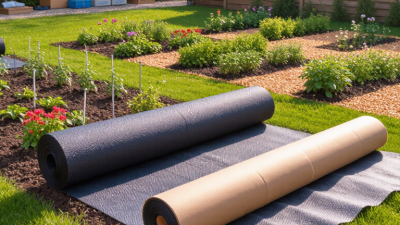
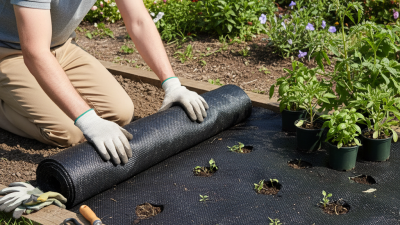
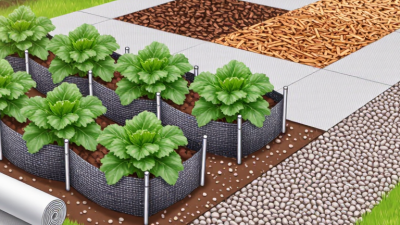
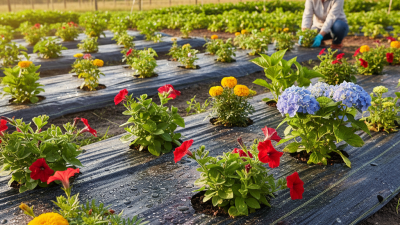
7 Best Weed Barrier Fabric Options for Global Buyers?
Choosing the right weed barrier fabric is rarely a simple price comparison. Global buyers face different soils, climates, crops, and installation conditions. A material that performs well in dry Australia may fail under constant rain in Southeast Asia.
Dr. Linda Chalker-Scott, an extension horticulturist and respected landscape expert, states, “Landscape fabric is not a permanent weed control solution.” That warning deserves attention. Weed barrier fabric can reduce sunlight, suppress emerging weeds, and protect pathways, but it cannot replace proper soil preparation or maintenance.
This guide examines seven practical options for international purchasing decisions. It considers woven polypropylene, nonwoven fabric, biodegradable materials, UV resistance, water permeability, thickness, and expected service life. It also looks at real handling details, including cutting around tree trunks, securing edges, and preventing soil from covering the fabric.
Small details matter.
A tightly woven fabric may control persistent weeds better, yet it can restrict water movement when soil becomes compacted. A lighter product may install quickly, but wind can lift it before the pins hold. Biodegradable fabric sounds environmentally responsible, although its breakdown rate may not match every climate or crop cycle.
The “best” option is therefore conditional. Buyers should request technical data, test samples, and clear information about raw materials and packaging. Supplier claims need verification. Even this approach has limits, because laboratory results cannot fully predict field performance.
Used thoughtfully, weed barrier fabric becomes one part of a dependable landscape system, not a standalone promise.
Define Weed Barrier Fabric by Material, Structure, and 50–150 g/m² Weight
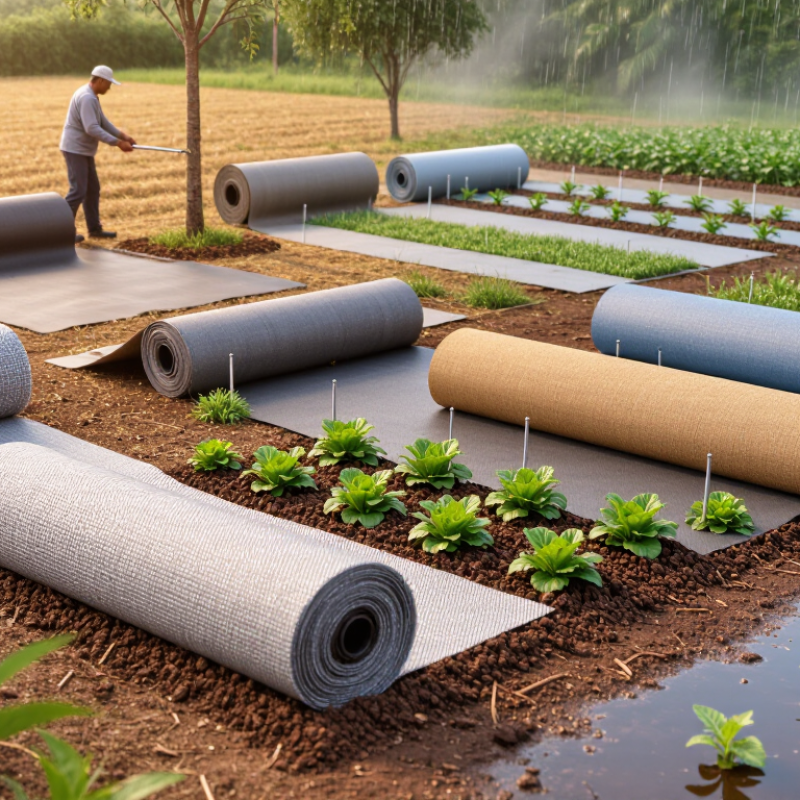
Weed barrier fabric is not defined by weight alone. Material, structure, and installation conditions matter more. Polypropylene is widely selected for its moisture resistance and stable tensile performance. Polyester offers strong dimensional stability, but it may cost more. Natural-fiber fabrics can reduce plastic use, yet they usually degrade faster in wet soil.
Structure changes field performance. Woven fabric uses crossing tapes, creating a firm surface for paths and nursery rows. Nonwoven fabric has bonded fibers, allowing flexible coverage and useful drainage.
Perforations or planting slits should release water without inviting excessive weed growth.
The 50–150 g/m² range covers many applications.
Around 50–80 g/m² suits short-term beds and light foot traffic. Fabrics near 100–150 g/m² provide better tear resistance for longer exposure.
However, heavier is not always better. This point is often overlooked.
FAO AQUASTAT reports that agriculture accounts for roughly 70% of global freshwater withdrawals. A permeable barrier can support efficient irrigation by reducing competing weed growth, but poor drainage can damage roots.
ASTM D4632 tensile testing and ASTM D4751 apparent opening-size testing help buyers compare strength and filtration objectively.
Field checks still matter.
Edges may lift. Slits may widen.
Tips: Request UV-resistance data, roll width, tolerance, and test reports. Check actual basis weight, not only the advertised range. For hot climates, inspect samples after sunlight exposure. A small trial plot can reveal failures that laboratory figures miss.
Evaluate Water Permeability Using ASTM D4491 and Soil Coverage Needs
For global buyers comparing seven weed barrier fabric options, water permeability deserves more attention than fabric weight alone. ASTM D4491 evaluates geotextile permittivity, showing how easily water passes through a material under controlled conditions. Results are reported in inverse seconds. Higher permittivity can support drainage, but it is not automatically better for every soil.
Water still matters.
FAO AQUASTAT reports that agriculture accounts for roughly 70% of global freshwater withdrawals. A poorly selected barrier can trap water above compacted clay, while an overly open fabric may allow fine soil particles to migrate. Compare the ASTM D4491 result with local soil texture, rainfall intensity, slope, and irrigation volume. Sandy beds usually need stronger soil retention. Clay soils often need better drainage paths.
Coverage also affects field performance.
Measure the planting area, then add material for overlaps, edges, cuts, and irregular corners. A practical overlap is often 100 to 300 millimeters, although wind and soil movement may require more. Check roll width carefully; fewer seams can reduce weed openings. The U.S. Federal Highway Administration’s geosynthetic guidance stresses compatibility between soil conditions and geotextile functions, not isolated test values. I would not select fabric from permeability data alone. Field installation is messier than laboratory testing. Edges lift, seams shift, and small cuts appear around plants. A sound comparison records ASTM D4491 data, coverage efficiency, and expected maintenance together.
Assess UV Durability with ASTM G154 and Expected Service Life
UV durability matters before price. ASTM G154 offers a controlled way to compare weed barrier fabrics under accelerated weathering. The test uses fluorescent ultraviolet lamps, condensation, and temperature cycles. These conditions imitate sunlight and moisture, but they do not recreate every climate. Results can reveal fading, brittleness, cracking, and strength loss. They cannot guarantee an exact outdoor lifespan.
For global buyers, request the complete ASTM G154 test conditions, not only the standard number. Check exposure duration, lamp type, irradiance, cycle settings, and evaluation method. A fabric tested for 1,000 hours under one cycle may not match another fabric tested differently. Ask for retained tensile strength and visual photographs after testing. This is practical evidence. Edges often fail first, especially where wind lifts the fabric against stones. Secure overlaps carefully.
Expected service life depends on latitude, heat, humidity, installation, and soil contact. In a sunny dry region, untreated material may become stiff within one season. In humid climates, trapped moisture can encourage degradation around punctures. Supplier estimates should be treated as ranges, not promises. My own preference is to compare laboratory results with field samples placed outdoors for several months. That approach costs more time. It reduces unpleasant surprises. A stronger fabric may still underperform if buried shallowly or exposed at the edges. Leave room for inspection and replacement planning.
7 Best Weed Barrier Fabric Options for Global Buyers
Indicative outdoor service-life comparison based on common material constructions and UV-stability practices. ASTM G154 is a laboratory exposure method; its test hours should not be directly converted into outdoor years without climate-specific validation.
Procurement guideline: use ASTM G154 screening at approximately 500–2,000 exposure hours, then compare retained tensile strength, appearance, and dimensional stability. Actual service life varies with UV index, temperature, moisture, soil contact, installation tension, and fabric weight.