
Skip to content

Why Choose Steel Rebar for Global Construction Projects?

Choosing the right reinforcement can determine how a bridge, warehouse, or residential tower performs for decades. Steel Rebar remains a trusted choice because it combines tensile strength, predictable behavior, and practical availability across many construction markets. Concrete handles compression well, but it performs poorly when pulled. Steel rebar helps control cracking and supports structural loads within reinforced concrete systems.

On active projects, its value becomes visible in ordinary details. Bundles arrive with heat numbers, bar diameters, and delivery records. Workers cut and bend the bars according to approved drawings. Inspectors then check spacing, lap lengths, concrete cover, and tying before the pour. These steps support quality control and make mistakes easier to identify. Engineers also compare product certificates with applicable standards, such as ASTM, BS, or European specifications, depending on the project location.

Steel rebar is not flawless. Poor storage can create excessive rust, while incorrect bends may weaken construction quality. Transportation delays can also disrupt a carefully planned schedule. This is where experienced suppliers, qualified engineers, and independent testing become important. A reliable supply chain should provide traceability, mechanical test results, weldability information, and clear documentation.

The decision requires judgment. Coastal structures may need enhanced corrosion protection, while seismic regions demand carefully detailed reinforcement connections. Recycled steel can support sustainability goals, but its quality and certification still require verification. Steel rebar offers strong, measurable performance, yet it only works well when design, materials, workmanship, and inspection remain connected. That practical discipline is often more important than the product alone.
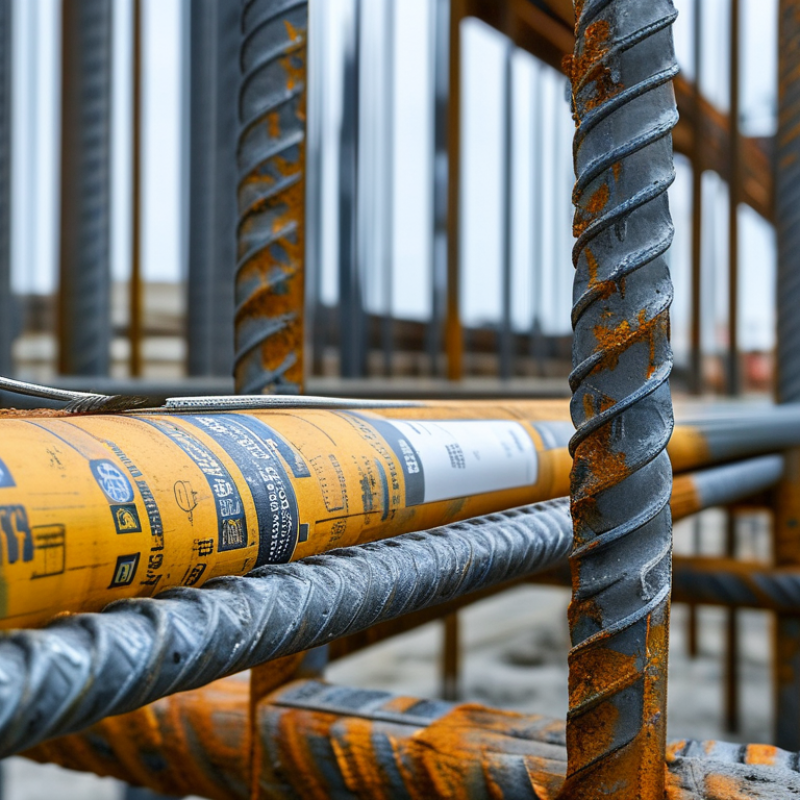
Why Choose Steel Rebar for Global Construction Projects?

What Is Steel Rebar and How Is It Used in Construction?

Steel rebar, short for steel reinforcing bar, is a ribbed steel rod embedded in concrete. Concrete handles compression well, but it performs poorly under tension. Rebar fills that weakness. Its ribs improve grip, helping concrete and steel act as one structural system. Common shapes include straight lengths, bent bars, and welded mesh.

On a construction site, crews place rebar inside footings, columns, beams, walls, and slabs. They follow structural drawings for bar diameter, spacing, lap length, and concrete cover. Plastic or concrete supports keep bars away from soil and formwork. That small distance matters. It helps protect steel from moisture and corrosion. Workers tie intersections with wire, then inspectors check alignment before pouring concrete.

Good practice depends on more than placing metal in a grid. Steel grade, bar condition, cutting methods, and storage areas all affect performance. Rust staining is not automatically dangerous, but deep scale deserves attention. A hurried inspection can miss an open lap or misplaced support. Field teams often pause around congested beam-column joints and confirm the engineer’s intent. Rebar is strong, recyclable, and widely available, yet it is not flawless. Poor detailing or careless placement can reduce its value. Accurate records, tested materials, and disciplined site checks make its use more dependable.

Which Properties Make Steel Rebar Suitable for Global Projects?

Why Choose Steel Rebar for Global Construction Projects?

Steel rebar suits global construction because its properties remain measurable across different climates and standards. Its ribbed surface improves mechanical anchorage inside concrete. High yield strength allows slimmer reinforcement layouts and efficient material use. Ductility also helps reinforced concrete absorb seismic energy before failure. This matters in earthquake-prone regions, where brittle behavior can become catastrophic.

The World Steel Association’s Steel Statistical Yearbook 2024 reports 1.84 billion tonnes of crude steel production in 2024. The organization also identifies construction and infrastructure as the largest steel-consuming sector, representing roughly half of global demand. These figures support steel’s worldwide availability and established supply chains. Standardized grades, documented mill certificates, and laboratory tensile tests improve traceability across borders. However, steel is not universally perfect. Saltwater exposure can accelerate corrosion, and poor storage can damage otherwise reliable bars. Designers must also check local codes, welding limits, and seismic requirements. Small details still decide performance.

Tips: Keep rebar raised above soil and covered during storage. Verify diameter, grade, rib pattern, and test certificates before installation. Use approved couplers when lap lengths become impractical. For coastal projects, specify concrete cover carefully and review corrosion protection. The right specification is not always the cheapest one.

Why Choose Steel Rebar for Global Construction Projects? – Which Properties Make Steel Rebar Suitable for Global Projects?

Property / Data Dimension Representative Data Importance for Global Construction Practical Project Benefit
Yield Strength Common reinforcing grades provide minimum yield strengths of approximately 400–500 MPa, depending on the applicable national or international standard. Supports structural designs for residential, commercial, industrial, bridge, transport and infrastructure projects in many regulatory environments. High yield strength allows reinforced concrete members to carry significant loads while helping control bar quantity and congestion.
Tensile Strength Representative reinforcing grades commonly provide minimum tensile strengths of approximately 500–650 MPa. Provides reserve capacity after yielding and supports ductile structural behavior when the reinforcement is correctly specified and detailed. Improves resistance to accidental overloads, seismic actions and dynamic stresses in properly designed structures.
Elastic Modulus Approximately 200 GPa for carbon steel, with values commonly specified near this level in structural design practice. The property is broadly recognized in major structural design codes and simplifies compatibility calculations with concrete. Helps engineers predict strain, crack development and serviceability performance with established design methods.
Density and Weight Approximately 7,850 kg/m³. A frequently used estimating formula is: mass per metre ≈ diameter² ÷ 162, with diameter in millimetres. The density is consistent and well documented, supporting reliable logistics, lifting plans and quantity estimates across countries. Enables accurate procurement, shipment planning, storage calculations and reinforcement schedules.
Ductility Ductility requirements vary by grade and standard; many seismic and structural specifications require defined elongation and tensile-to-yield ratios. Ductile reinforcement is valuable in regions exposed to earthquakes, impact, vibration, wind and other cyclic actions. Allows controlled deformation before failure and improves structural warning and energy-dissipation capacity.
Bond with Concrete Ribbed or deformed bars mechanically interlock with concrete; bond performance depends on rib geometry, bar size, concrete quality and development length. Deformed-bar systems are included in widely used concrete design and construction standards around the world. Improves load transfer, anchorage and crack control compared with smooth reinforcement of the same diameter.
Thermal Expansion Compatibility Steel has a coefficient of thermal expansion of approximately 11.7 × 10⁻⁶ per °C, broadly similar to normal-weight concrete. Similar thermal movement reduces internal stress caused by ordinary temperature changes in reinforced concrete. Supports durable performance in buildings, pavements, bridges and foundations exposed to changing temperatures.
Standardized Sizes Common nominal diameters include approximately 6, 8, 10, 12, 16, 20, 25, 32 and 40 mm; larger sizes are available for specialized work. A broad size range enables adaptation to local design codes, structural loads, fabrication equipment and construction methods. Simplifies detailing and allows reinforcement layouts to be optimized for strength, spacing, congestion and constructability.
Fabrication and Connection Bars can generally be cut, bent and joined using approved mechanical couplers, laps or welding procedures, subject to grade and specification requirements. Flexible connection methods help accommodate different labor practices, site conditions and project specifications. Supports prefabrication, faster placement and practical solutions where lap lengths or access are restricted.
Fire Performance Steel is non-combustible, but its strength and stiffness decrease at elevated temperatures; concrete cover and fire design remain essential. Reinforced concrete systems can be designed for fire resistance under major building and infrastructure codes. Provides a robust fire-resistance solution when cover, member dimensions and fire-rating requirements are properly designed.
Corrosion Management Unprotected carbon-steel rebar relies on adequate concrete quality, cover, crack control and exposure-specific design. Coated or corrosion-resistant options may be specified for severe environments. The material can be adapted to marine, de-icing salt, industrial and tropical environments through appropriate durability specifications. Offers a practical durability strategy when mix design, drainage, detailing, inspection and protection measures are coordinated.
Recyclability Steel can be recovered and recycled at the end of a structure’s service life, subject to collection and processing systems. Supports circular-material strategies and can reduce dependence on virgin raw materials when effective recycling infrastructure is available. Improves material recovery potential and supports sustainability reporting for infrastructure and building projects.
Quality Verification Typical verification includes chemical composition, tensile and yield testing, elongation, bend or re-bend testing, dimensional checks and traceability documentation. Standardized testing helps owners, designers and contractors compare supplied reinforcement with project specifications across international supply chains. Reduces quality risk and supports acceptance, inspection, certification and long-term project records.
Availability and Supply-Chain Practicality Steel reinforcement is produced in a wide range of diameters, lengths and grades, subject to regional capacity and project requirements. Its established international supply chain makes it suitable for large-scale projects with phased procurement and diverse site locations. Facilitates standardized reinforcement schedules, replacement sourcing and coordinated delivery for multi-country projects.

Technical note: Representative values are provided for comparison only. Actual requirements depend on the governing standard, reinforcement grade, bar diameter, exposure class, seismic category, welding or coupler procedure, concrete design and project specifications.

Reference framework: Values and descriptions are aligned with commonly used provisions and terminology found in international and national reinforcement standards, including ISO 6935-2, EN 10080, ASTM A615/A706 and comparable regional specifications.

How Does Steel Rebar Improve Structural Safety and Durability?

Steel rebar strengthens concrete by carrying tensile forces that concrete handles poorly. In a reinforced slab, bars resist cracking when people, vehicles, or machinery create repeated loads. This interaction improves structural safety around beams, columns, foundations, and bridge decks. Good design begins with verified calculations, suitable bar sizes, and careful spacing. Small details matter.

On active projects, crews inspect rebar before concrete placement. They check diameter, lap length, concrete cover, supports, and ties against approved drawings. Adequate cover helps protect embedded steel from moisture, salts, and carbon dioxide. Properly placed bars also limit crack width, reducing paths for water and corrosive chemicals. These controls reflect practical site experience, not only textbook theory. Independent testing can confirm yield strength, bend performance, and material traceability.

Durability still depends on the whole system. Poor drainage, contaminated materials, or careless placement can shorten service life. Steel rebar is not a magic solution. In field inspections, minor alignment errors have sometimes led to expensive repairs when checks were rushed. That risk deserves honest attention. Engineers should review exposure conditions, seismic demands, fire requirements, and local construction standards before approving details. Inspections can still miss problems when schedules become aggressive. Clear records and measured site checks remain essential.

What Standards Govern Steel Rebar Quality Worldwide?

Steel rebar supports bridges, towers, ports, and foundations worldwide. Its quality depends on consistent strength, ductility, rib geometry, and traceability. These properties affect anchorage, crack control, and structural safety under heavy loads.

No single standard governs every project. ASTM A615 and A706 are widely used in North America. BS 4449 supports many British specifications, while EN 10080 provides European requirements for reinforcing steel. Japan commonly applies JIS G3112, and Australia references AS/NZS 4671. ISO 6935-2 also defines requirements for ribbed reinforcing steel. Local building codes may add seismic, welding, or corrosion provisions. Engineers should match the selected grade with the project design code, not simply choose the cheapest available bar. A certificate may look complete. It still needs verification.

Tips: Check heat numbers against mill certificates and delivery tags. Confirm yield strength, tensile strength, elongation, bend, and rebend results. Review rib dimensions when bond performance matters. Use independent testing for unfamiliar suppliers or critical structures. Store bars above standing water and remove heavy rust, oil, or concrete residue before placement. Digital records help, but incorrect data entry remains a real weakness. A site inspection can reveal misplaced bars, damaged bends, or mixed grades before concrete hides them. Specification wording also deserves careful review, because “compliant” may refer to testing only, not complete project acceptance.

Why Choose Steel Rebar for Global Construction Projects?

What Standards Govern Steel Rebar Quality Worldwide?

Minimum specified yield strength is a key quality indicator for reinforcing steel. The standards shown below use different grade-designation systems, but each establishes requirements for mechanical performance, chemical composition, dimensions, testing, and traceability.

Representative grades: ASTM A615/A615M Grade 60, EN 10080/BS 4449 B500B, ISO 6935-2 B500B, JIS G3112 SD390, AS/NZS 4671 500N, and CSA G30.18 Grade 400W. Values are minimum specified yield strengths and are not a direct statement of interchangeability between standards.

How Should Builders Select, Transport, and Install Steel Rebar?

Builders should select steel rebar against the structural design, exposure class, and local standard, not price alone. Grade, yield strength, ductility, bendability, and weldability require documented mill certificates and heat numbers. For seismic work, specified ductility matters greatly. Standards such as ISO 6935-2, ASTM A615, and ASTM A706 provide useful reference points, but the engineer’s approved specification remains controlling. The choice also affects carbon planning. The World Steel Association reports that steel production contributes about 7–9% of global carbon dioxide emissions. Recycled-content declarations and verified environmental data can therefore support better procurement decisions.

Transport begins with a dry, stable loading plan. Bundle tags should remain readable after rain, dust, and repeated handling. Rebar should be separated from soil and standing water, using timber supports rather than placing bundles directly on the ground. Long bars need controlled overhangs, visible warning markers, and properly rated restraints. Delivery timing matters too. A congested site can turn one misplaced bundle into hours of crane movement and manual handling. The 2024 Global Status Report for Buildings and Construction states that buildings and construction used 32% of global energy and produced 34% of global carbon dioxide emissions in 2022. Fewer damaged bars and shorter handling routes are small, practical improvements.

During installation, crews should verify bar size, spacing, lap lengths, anchorage, chairs, and concrete cover before the pour. Cover blocks must suit the exposure condition, not merely lift bars off the formwork. Protruding bars require impalement protection under construction safety rules. A forgotten opening or shifted chair can compromise the inspection. Site teams should record nonconformities honestly, even when correction delays the pour. Perfect coordination is uncommon. The checklist still catches what memory misses.

Article Source: