
Why Choose High Quality Cabinet Hardware?
Choosing cabinet hardware can seem like a small design decision. In practice, it affects daily comfort, safety, and the life of your furniture. High Quality Cabinet Hardware offers more than an attractive finish. It provides dependable movement, stronger connections, and a better response to repeated use.
Open a drawer hundreds of times. The difference becomes clear. A well-made runner should glide smoothly without grinding sounds. A solid hinge should hold alignment when cabinet doors become heavy. Handles should feel balanced, with edges that do not irritate your fingers. These details matter in kitchens, bathrooms, offices, and other busy spaces. Professional installers also examine screw strength, load capacity, corrosion resistance, and adjustment range before recommending products.
Good hardware is not automatically perfect. Even premium components can fail when installed poorly or overloaded. That is an important point. Correct measurements, suitable fasteners, and regular cleaning still matter. Some finishes may show fingerprints, while certain mechanisms need occasional adjustment. These limitations deserve honest attention. A trustworthy supplier should explain material choices, testing information, warranty terms, and maintenance requirements clearly. Product consistency matters too, especially when a renovation requires matching handles across several rooms.
This guide explores why quality hardware deserves careful consideration. It connects practical performance with long-term value, visual consistency, and user confidence. The goal is not to promote the most expensive option. It is to help readers choose hardware that performs reliably, suits the cabinet design, and remains comfortable after years of ordinary use.
What Defines High-Quality Cabinet Hardware
Why Choose High Quality Cabinet Hardware?
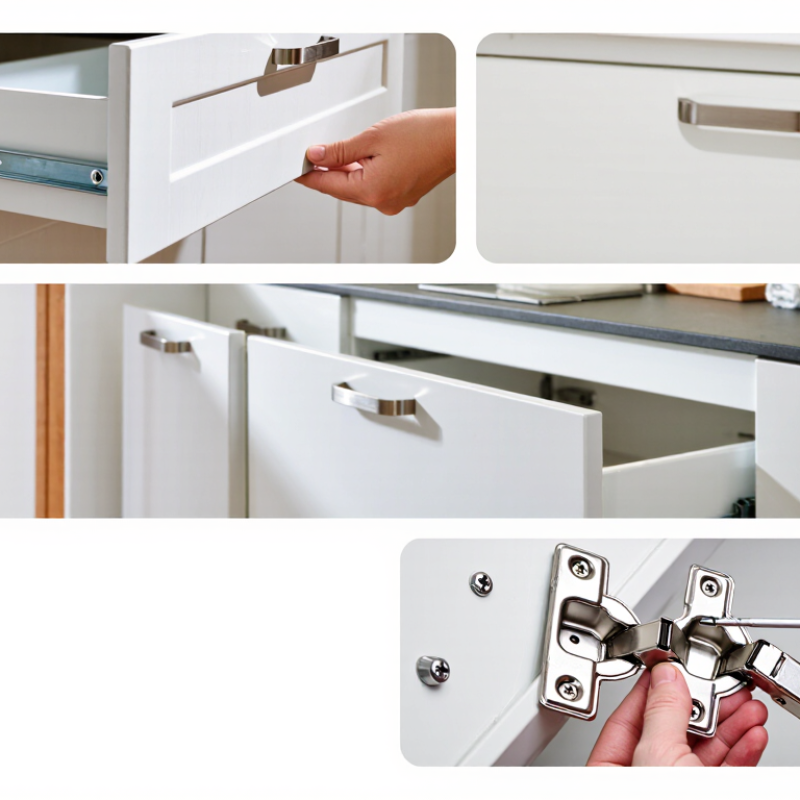
What defines high-quality cabinet hardware is not a shiny finish alone. It is controlled movement, accurate fitting, and dependable performance after years of daily use. The 2024 NKBA Kitchen Trends Report identifies durability and easy maintenance as recurring priorities among kitchen professionals. That matches what installers see on site. A quality hinge closes without scraping. A drawer slide feels steady, even when loaded with cookware. Small details matter.
Testing separates appearance from engineering. ANSI/BHMA A156.9 evaluates cabinet hardware through load, cycle, and corrosion testing. These checks examine how components behave under repeated use, not only in a showroom. Houzz’s 2024 U.S. Kitchen Trends Study also tracks cabinet and storage upgrades across more than 1,000 renovation projects, showing how frequently homeowners invest in functional kitchen improvements. The numbers suggest a practical lesson: hardware receives constant contact, so weak components become expensive annoyances.
Material choice matters. Stainless steel resists moisture better than poorly protected steel, while solid brass can provide a reassuring weight. Still, weight alone proves little. I have handled heavy pulls with loose mounting threads. They looked impressive. They failed early. High-quality hardware should include consistent drilling dimensions, smooth edges, secure fasteners, and a finish tested for household cleaners. No finish stays perfect forever. That is worth admitting. Good design reduces wear, but it cannot defeat careless installation or excessive force.
| Evaluation Dimension | Typical High-Quality Benchmark | Why It Matters | Practical Quality Check |
|---|---|---|---|
| Base Material | Hinges and drawer slides commonly use cold-rolled steel or stainless steel. Solid brass, zinc alloy, and aluminum are also used for selected knobs, pulls, and fittings. | Material selection affects strength, dimensional stability, corrosion resistance, and service life. | Check whether the material is clearly specified instead of relying only on terms such as “premium metal” or “heavy duty.” |
| Load Capacity | Full-extension drawer slides should have a clearly stated rated load, often 45 kg or more for residential heavy-duty applications when properly installed. | A published load rating helps match the hardware to cookware, tools, pantry items, or other concentrated loads. | Compare the rating with the actual drawer load and confirm whether the rating applies to a pair of slides and under what installation conditions. |
| Opening and Closing Durability | Well-designed hinges and slides are commonly tested for tens of thousands of operating cycles; many furniture-hardware test programs use 40,000-cycle or higher durability testing. | Repeated movement is one of the main causes of looseness, noise, misalignment, and premature failure. | Look for documented cycle testing, controlled test conditions, and a defined failure limit rather than an unsupported lifetime claim. |
| Corrosion Resistance | Quality hardware uses suitable plating, powder coating, anodizing, or stainless steel. Salt-spray performance should be reported according to a recognized method such as ASTM B117 or ISO 9227. | Moisture, cleaning products, and coastal air can cause rust, pitting, discoloration, and loss of smooth operation. | Check the test method, exposure time, substrate, and acceptance criteria. Salt-spray hours are useful only when test conditions are comparable. |
| Dimensional Accuracy | Mounting holes, slide lengths, hinge cups, and adjustment points should be manufactured within controlled tolerances appropriate to the hardware design. | Accurate dimensions make installation easier and help doors and drawers remain aligned over time. | Inspect hole spacing, mounting plates, slide symmetry, and the fit between moving components before installation. |
| Adjustment Range | Concealed cabinet hinges commonly provide independent adjustment for at least three directions: side-to-side, depth, and height. | Adjustment compensates for small cabinet or door variations and supports consistent gaps across a cabinet run. | Turn the adjustment screws through their usable range and confirm that movement is controlled without excessive play. |
| Movement Quality | High-quality slides should provide smooth, controlled travel with minimal side-to-side play. Soft-close mechanisms should engage progressively rather than stop the drawer abruptly. | Controlled movement reduces noise, protects cabinet joints, and improves the daily user experience. | Test the hardware with a realistic load. Listen for grinding, clicking, scraping, or uneven damping during the complete travel. |
| Safety and Retention | Drawer slides should include a reliable stop or disconnect mechanism, and lift-up or pull-down fittings should control movement throughout their operating range. | Retention features help prevent accidental drawer removal, uncontrolled door movement, and user injury. | Verify that release levers operate intentionally and that the drawer or door remains secure during normal use. |
| Finish Consistency | Visible surfaces should have uniform color, coverage, texture, and edge treatment, with no sharp burrs, exposed substrate, blistering, or flaking. | A consistent finish improves appearance and can protect the underlying material from handling and environmental exposure. | Review edges, screw recesses, corners, and moving interfaces, where coating defects are most likely to appear. |
| Fastener Compatibility | Mounting screws should be suitable for the cabinet substrate, hole size, thread type, and expected load. Hardware should include complete and compatible installation components. | Even strong hardware can fail when screws are too short, poorly matched, or installed in weak material. | Confirm screw length, head type, thread engagement, and recommended pilot-hole size before installation. |
| Standards and Testing | Prefer products tested against relevant furniture-hardware standards, such as ANSI/BHMA A156.9 for cabinet hardware or applicable EN and ISO test methods. | Recognized standards define repeatable procedures for strength, durability, corrosion, and functional performance. | Ask for the exact standard, test date, product configuration, and report scope instead of accepting a generic “tested” statement. |
| Installation Tolerance | Quality hardware includes clear mounting dimensions, alignment instructions, adjustment guidance, and tolerances for common cabinet construction variations. | Good installation information reduces rework and helps the hardware perform as tested. | Check whether the instructions show drilling patterns, minimum clearances, load conditions, and adjustment procedures. |
| Repairability and Replacement | Preferred designs use replaceable screws, mounting plates, dampers, clips, or other serviceable components where practical. | Replaceable parts can extend the useful life of the cabinet and reduce the cost and waste associated with complete replacement. | Confirm whether spare components and installation parts can be obtained separately after the original installation. |
| Warranty and Technical Support | A credible warranty should state its duration, coverage, exclusions, installation requirements, and claim process in clear language. | Transparent support indicates that performance expectations and product limitations have been defined. | Read the warranty conditions and retain the installation instructions, purchase records, and product identification information. |
| Sustainability and Compliance | Responsible products provide material information, use durable finishes, minimize unnecessary packaging, and comply with applicable chemical and product-safety requirements. | Longer service life and controlled material use can reduce replacement frequency and environmental impact. | Look for clear compliance documentation and packaging that protects the product without excessive or difficult-to-recycle materials. |