
Why Choose Foil Roll for Global Packaging Needs?
Why Choose Foil Roll for Global Packaging Needs?
Global packaging is becoming more demanding, not simply larger. Products may travel from humid ports to cold warehouses before reaching consumers. During that journey, packaging must resist light, oxygen, moisture, and contamination.
Foil Roll offers a highly effective barrier in a compact format. The International Aluminium Institute reports that aluminium can be recycled repeatedly without losing its essential properties. Its 2023 data also highlights aluminium’s continuing role in circular packaging systems. Smithers projects steady growth in the global flexible packaging market, supported by convenience foods, healthcare products, and e-commerce distribution. These trends create practical pressure for reliable, lightweight barrier materials.
Gordon L. Robertson, author of Food Packaging: Principles and Practice, wrote, “Packaging is a means of ensuring the safe delivery of a product to the ultimate consumer in good condition at minimum overall cost.” His observation remains relevant. A properly converted Foil Roll can protect powdered ingredients, blister packs, ready-meal trays, and sensitive industrial components. It can also reduce product loss when specifications, sealing temperatures, and storage conditions are carefully controlled.
Still, foil is not a magic solution. Its production has environmental impacts, and thin structures may tear when poorly designed. Recycling also depends on local collection and separation systems. That is where professional material selection matters. Packaging engineers must balance thickness, alloy, coating, printability, transport weight, and end-of-life options. The best global choice is not always the thickest roll. It is the one that protects the product with measured, evidence-based performance.
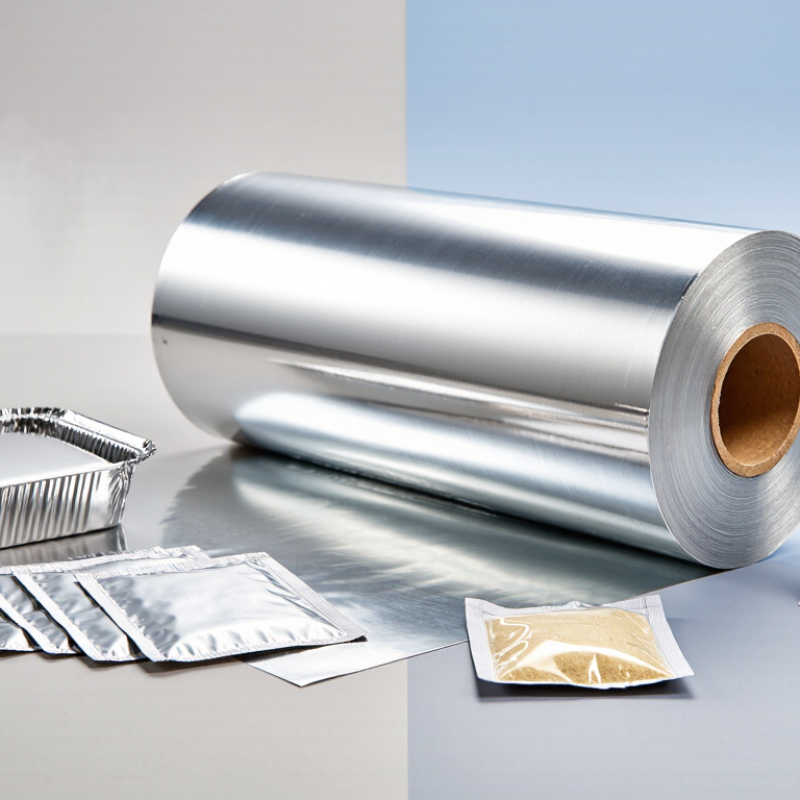
Foil Roll’s Role in the Global Flexible Packaging Market: Smithers Data
Why Choose Foil Roll for Global Packaging Needs?
Smithers market data places foil roll within a growing flexible packaging conversation. Demand is linked to longer shelf life, lighter transport, and efficient material use. Foil roll provides a strong barrier against light, oxygen, moisture, and aroma loss. These properties matter for food, pharmaceutical, and household applications worldwide. The material also supports compact pack formats. Less empty space can reduce handling and freight pressure.
Converters value foil roll because it can run through established laminating and forming equipment. Consistent thickness helps control sealing, folding, and web tension. Experienced quality teams still inspect pinholes, surface damage, coating coverage, and roll alignment. Small defects can become costly during high-speed production. Smithers research also reflects market pressure for practical sustainability, not simple material substitution. Foil can reduce product waste, yet multilayer structures may complicate recovery.
The picture is not perfect. Foil roll needs careful design, verified sourcing, and application-specific testing. A thinner gauge may lower material use, but it can also reduce handling tolerance. That trade-off deserves attention. I would not treat one market forecast as a purchasing decision. Regional infrastructure, customer expectations, and packaging regulations can change the result. Trial runs reveal issues that specifications often miss. Clean edges matter. So does reliable documentation.
Why Choose Foil Roll for Global Packaging Needs? - Foil Roll’s Role in the Global Flexible Packaging Market: Smithers Data
| Data Dimension | Verified Data Point | Relevance to Global Flexible Packaging | Packaging Implication |
|---|---|---|---|
| Packaging format | Continuous foil rollstock is supplied in master rolls or converted rolls. | Rollstock supports high-speed printing, laminating, slitting, pouch making, lidding and form-fill-seal operations. | Converters can produce multiple package formats from one base material. |
| Common foil thickness | Commercial flexible-packaging foil commonly falls within approximately 6–50 micrometres, depending on the application. | Different thicknesses balance barrier performance, puncture resistance, weight and cost. | Thin foil is suitable for laminates and lidding; thicker foil provides greater mechanical protection. |
| Light barrier | Aluminium foil provides a complete light barrier when the foil layer is continuous and free from damaging defects. | Light-sensitive products can receive protection across diverse distribution and storage environments. | Useful for products affected by ultraviolet or visible-light exposure. |
| Moisture and oxygen barrier | Intact aluminium foil offers an extremely high barrier to water vapour, oxygen and aroma transfer. | Barrier protection helps maintain product quality and can extend shelf life when the complete package is correctly designed. | Foil is often selected for sensitive food, pharmaceutical and technical products. |
| Typical laminate structures | Common structures include polyester/foil/polyethylene, polyamide/foil/polyethylene and paper/foil/polymer combinations. | Multilayer construction combines foil’s barrier with polymer sealability, printability and toughness. | The final structure should be selected according to filling method, seal temperature, product chemistry and shelf-life targets. |
| Areal weight reference | Using aluminium density of approximately 2.70 g/cm³, 10 micrometres of foil weighs about 27 g/m²; 20 micrometres weighs about 54 g/m². | Areal weight helps packaging engineers compare material consumption and estimate roll yield. | Thickness optimisation can reduce material use without sacrificing required barrier performance. |
| Product applications | Foil rollstock is used in sachets, pouches, lidding materials, pharmaceutical packs, retort laminates and household product packaging. | These applications represent major use cases within the global flexible-packaging ecosystem. | One roll format can serve food, healthcare, personal-care and industrial packaging segments after suitable conversion. |
| Thermal performance | Aluminium melts at approximately 660.3°C, while the usable temperature range of a package is normally limited by the polymer sealant and laminate design. | Foil can withstand demanding processing conditions, but the complete laminate must be validated for heat exposure. | Retort, hot-fill and sterilisation applications require structure-specific testing. |
| Mechanical protection | Foil has strong dead-fold characteristics and provides high barrier protection, but it can be damaged by sharp creases, pinholes or excessive flexing. | Performance depends on foil gauge, laminate support, handling and transport conditions. | Protective outer layers and suitable converting controls are important for demanding supply chains. |
| Recycling consideration | Aluminium is recyclable, but foil-based flexible laminates may require specialised collection and separation systems because they combine several materials. | Recyclability depends on local infrastructure, package composition, contamination and sorting technology. | Material selection should consider end-of-life requirements in each target market. |
| Market role | Foil roll is a functional barrier component within the wider flexible-packaging market rather than a standalone package category. | Its value is measured by barrier efficiency, format flexibility, product protection and compatibility with high-speed converting. | The strongest use cases are products where shelf life, aroma retention, light protection or processing resistance justify a foil-containing structure. |
Data basis: established aluminium material properties, standard flexible-packaging construction practices and publicly described market characteristics. Actual performance depends on foil gauge, laminate design, sealing conditions, package geometry and regional recycling infrastructure.