China Top 10 Retaining Wall Blocks Manufacturers?
China’s retaining wall blocks industry deserves closer attention as construction demand shifts toward durable, modular landscape systems. Grand View Research’s 2024 Concrete Blocks Market report identifies infrastructure investment, housing development, and modular construction as important growth drivers through 2030. Fortune Business Insights also reports continued demand for concrete masonry products, especially where strength, installation speed, and lifecycle value matter.
China is a major production base. Its manufacturers serve residential gardens, highway projects, commercial developments, and erosion-control applications. Yet factory scale alone does not prove quality. Buyers should examine compressive strength, freeze-thaw performance, drainage design, dimensional tolerance, testing records, and export experience. Small details matter. A poorly aligned block can create visible movement after heavy rain.
Allan Block founder and retaining-wall specialist Allan Block states, “The foundation is the most important part of a retaining wall.” That principle remains practical when comparing Chinese suppliers. Strong manufacturers should explain their base preparation, geogrid compatibility, setback requirements, and installation limits. They should also provide drawings, samples, and traceable product specifications.
This China Top 10 Retaining Wall Blocks Manufacturers overview will compare companies through product range, production capability, certifications, customization, project experience, and customer support. The ranking is not absolute. Public factory data is uneven, and online claims can be difficult to verify. That weakness deserves attention.
A useful shortlist should support informed decisions, not simply repeat marketing language. Cost matters. So does performance over time. The best supplier may not be the cheapest one.

Understanding China’s Retaining Wall Block Manufacturing Industry
China Top 10 Retaining Wall Blocks Manufacturers?
China’s retaining wall block manufacturing industry combines large-scale production with flexible customization. Manufacturers commonly use concrete mixers, automated molds, vibration systems, and controlled curing rooms. These processes improve dimensional consistency and surface strength. However, equipment alone does not guarantee reliable performance.
Experienced buyers examine compressive strength, water absorption, freeze-thaw resistance, and block tolerances. They should also review aggregate sources, cement specifications, laboratory records, and production samples. A practical factory visit can reveal more than a polished catalogue. Check mold wear, storage conditions, pallet protection, and drainage-related accessories. Small cracks around block edges deserve attention. They may indicate handling problems or incomplete curing.
Quality control varies between factories. Some provide clear test reports and traceable batch numbers. Others offer limited technical evidence, which requires careful follow-up. Export documentation, packaging methods, and loading practices also affect project results. Retaining wall blocks must match local soil pressure, wall height, drainage design, and climate conditions. A strong block can still fail when installation ignores engineering requirements. This point is often underestimated. Comparing ten potential manufacturers should therefore involve technical capability, production experience, communication accuracy, and after-sales support. Price remains important, but the lowest quotation may hide inconsistent materials or higher installation costs. Further verification is always worthwhile.
How the Top 10 Manufacturers Are Evaluated
How the Top 10 Manufacturers Are Evaluated
Selecting China’s top retaining wall block manufacturers requires more than comparing catalogs. A reliable evaluation begins with product performance, factory experience, and documented quality controls. Inspectors should review compressive strength, water absorption, freeze-thaw resistance, and dimensional accuracy. Small size variations can create visible gaps during installation. A polished brochure is not proof.
Factory capability also matters. Evaluators should examine curing areas, molding equipment, laboratory tools, and batch inspection records. Experienced manufacturers can explain mix designs, raw material sources, and production limits clearly. They should provide recent test reports from qualified laboratories. Consistent color and texture are useful, but structural performance carries greater weight. Delivery records, packaging quality, technical support, and response time should also influence the ranking. No ranking is perfect. Supplier data still needs independent checking.
Tips: Request samples from several production batches. Test them outdoors. Ask how damaged blocks are handled. Compare actual measurements with technical drawings, not promises. Review project references with similar soil, slope, and weather conditions. A manufacturer that admits a limitation may be more dependable than one claiming universal performance. Pricing deserves attention, but unusually low prices can hide weaker materials, rushed curing, or inadequate inspection. Keep evaluation notes, photographs, and test results together before making a purchasing decision.
Profiles of China’s Top 10 Retaining Wall Block Manufacturers
China’s top ten retaining wall block manufacturers represent a broad mix of production strengths. The first focuses on high-strength concrete blocks for highways and industrial sites. The second specializes in interlocking landscape units with textured faces. Another serves large municipal projects with automated molding lines and strict batch testing. A fourth combines recycled aggregates with standard compressive-strength requirements. The fifth offers lightweight blocks for residential gardens and small slopes.
The remaining manufacturers differ in useful ways. One provides modular blocks for fast installation and temporary layouts. Another develops colored architectural finishes for public spaces. A coastal producer emphasizes salt-resistant mixtures for humid environments. One factory supports custom molds and unusual dimensions. The final profile highlights a large exporter with documented quality checks, pallet protection, and container-loading experience. These descriptions should not replace site testing. Mix performance can change with local sand, water, and curing conditions. That detail is easy to overlook.
Tips: Compare compressive strength, freeze-thaw resistance, drainage design, and dimensional tolerance. Request recent test reports, sample blocks, and installation guidance. Inspect the factory if possible. Ask how rejected units are handled. A low price may hide weaker edges, inconsistent color, or costly freight. Measure the wall system, not only one block. Soil pressure still matters.
China Top 10 Retaining Wall Block Manufacturers
Representative comparison of commonly published retaining wall block formats in China. The data focuses on product dimensions rather than company or brand performance.
The chart compares typical small, medium, and large concrete retaining wall block formats by length, depth, and height. Actual specifications may vary according to engineering requirements, mold designs, and project standards.
Comparing Products, Materials, Certifications, and Production Capacity
China Top 10 Retaining Wall Blocks Manufacturers: Comparing Products, Materials, Certifications, and Production Capacity
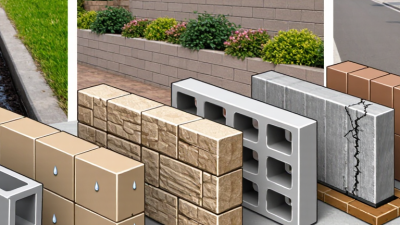
When comparing Chinese retaining wall block manufacturers, inspect product design before factory size. Common options include hollow concrete blocks, solid landscape units, and interlocking systems. Concrete strength, water absorption, freeze-thaw resistance, and dimensional accuracy affect field performance. A block may look attractive but fail when drainage is poorly planned. That mistake is more common than many buyers expect.
Material selection should match soil, rainfall, loading, and installation conditions. Recycled aggregates can reduce material use, but their quality must remain consistent. Ask for recent laboratory reports, production samples, and batch traceability records. Certifications may include ISO quality systems, environmental management standards, and product testing documents. However, certificates alone prove little without verification from an accredited body. Check issue dates, testing scope, and whether the documents match the supplied block.
Tips:
Request a factory video or arrange an independent inspection. Compare daily output, curing methods, mold numbers, and warehouse capacity. A large stated capacity may not reflect actual output during peak seasons. Ask about lead times for custom colors and molds. Confirm packaging strength, pallet dimensions, and replacement procedures before signing. I would also test a small shipment first; it costs more, but it can reveal color variation, chipped corners, or inconsistent measurements early. Availability is useful, yet dependable quality matters more.
How to Choose a Reliable Chinese Retaining Wall Block Manufacturer
How to Choose a Reliable Chinese Retaining Wall Block Manufacturer
Choosing a reliable Chinese retaining wall block manufacturer requires more than comparing prices. Review production experience, material sources, and quality procedures. Ask for compressive strength, water absorption, and freeze-thaw test reports. These records should match the actual product series. A factory visit can reveal practical details, such as clean molds, covered aggregate, and organized storage. A polished showroom can mislead. I have learned that consistent batch control matters more than impressive photographs.
Request physical samples before placing a large order. Check their dimensions, surface texture, color variation, and edge damage. Small differences can create visible lines during installation. Confirm whether the blocks suit your soil, wall height, drainage design, and local climate. Reliable manufacturers should provide technical drawings and loading guidance. They should also explain packaging methods for long-distance shipping. Weak communication is an early warning sign, even when the quotation looks attractive.
Tips: Compare at least three factories. Verify certificates directly with the issuing organization. Inspect a recent production batch, not only old samples. Clarify mold ownership, replacement parts, lead times, and inspection responsibilities in writing. Keep a retained sample from each approved batch. This may feel excessive, but it helps resolve disputes later. Avoid choosing solely by the lowest unit price; transport damage and inconsistent dimensions can quickly erase the savings.