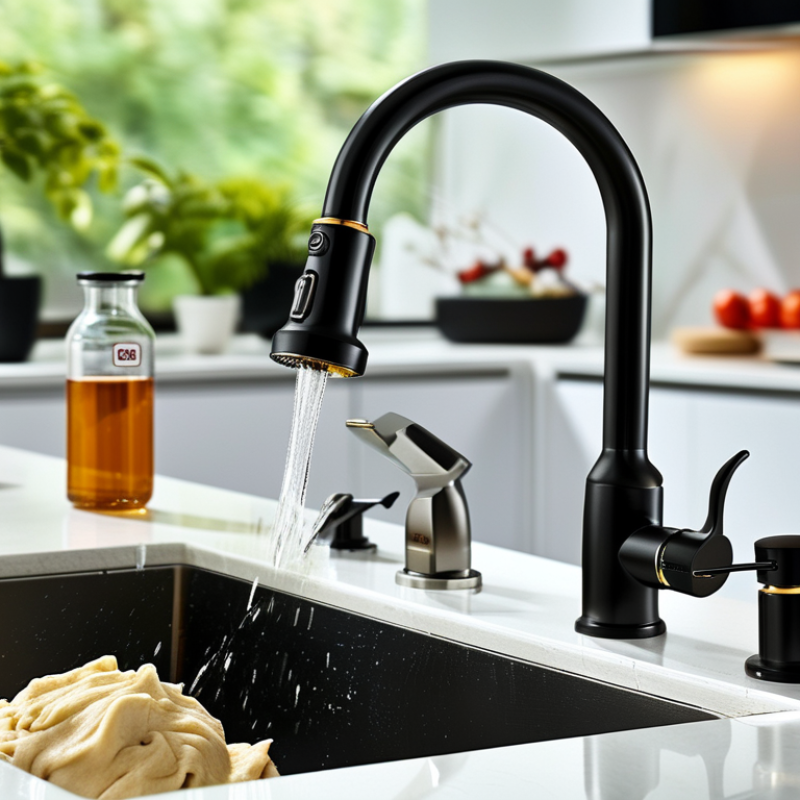
| Water Efficiency | Residential kitchen faucets commonly have maximum flow rates between 1.5 and 2.2 gallons per minute (5.7–8.3 L/min). | Choose 1.5–1.8 gpm (5.7–6.8 L/min) when the household’s water pressure supports it. | A lower flow rate can reduce water consumption while preserving adequate rinsing performance. | Read the faucet’s flow-rate label and check whether the rating is based on the applicable plumbing standard. |
| Activation Reliability | Touchless sensors typically respond in approximately 0.3–1.0 seconds, depending on sensor design, distance, lighting, and water conditions. | Consistent activation within about 1 second, with minimal false starts or shutoffs. | Reliable activation improves hygiene and reduces wasted water caused by repeated attempts. | Test activation with wet and dry hands, different hand positions, and common objects such as pans and plates. |
| Temperature Safety | Hot-water scalding risk increases as outlet temperature rises; many installations use a temperature limit or thermostatic control. | Use adjustable temperature limiting, a manual override, and stable temperature control. | Temperature limiting helps protect children, older adults, and users with reduced sensitivity to heat. | Confirm the installation instructions include temperature-limit adjustment and check for safety certification where applicable. |
| Backflow Protection | Backflow-prevention requirements vary by jurisdiction and installation type; certified plumbing components are designed to reduce contamination risk. | Select a faucet compliant with the plumbing standards required in the installation location. | Proper backflow protection helps prevent contaminated water from entering the potable-water system. | Check documentation for applicable standards such as ASME A112.18.1/CSA B125.1 and local code requirements. |
| Water-Contact Materials | Faucets may use stainless steel, brass, engineered polymers, ceramic cartridges, and elastomer seals. | Prefer corrosion-resistant construction and compliance with drinking-water contact requirements. | Material quality affects taste, corrosion resistance, leakage risk, and service life. | Look for material specifications and certifications such as NSF/ANSI/CAN 61 where relevant. |
| Cartridge Durability | Ceramic cartridges are designed to resist wear, but actual life depends on water quality, pressure, usage, and maintenance. | Choose a replaceable ceramic cartridge with readily available service parts. | A replaceable cartridge can extend useful life without replacing the entire faucet. | Check the parts diagram, cartridge availability, and warranty terms before purchase. |
| Power System | Battery life varies widely with battery type, activation frequency, sensor settings, and standby design; many systems use replaceable batteries. | Prefer replaceable batteries, low-battery indication, and a manual operating mode. | A manual fallback maintains access to water during battery depletion or electronic failure. | Confirm battery size, estimated replacement interval, access method, and emergency-operation instructions. |
| Electrical Safety | The faucet is installed in a wet environment, so power components require suitable enclosure and installation protection. | Use sealed electronics, clear installation limits, and a compliant power adapter if mains power is used. | Moisture protection reduces the likelihood of corrosion, malfunction, and electrical hazards. | Review electrical ratings, adapter certification, installation clearances, and required ground-fault protection. |
| Leak Resistance | Leak risk is affected by hose connections, seals, supply pressure, installation quality, and component wear. | Choose braided supply lines, replaceable seals, secure fittings, and a clearly defined leak warranty. | Preventing small, hidden leaks protects cabinets, flooring, and stored household items. | Inspect connections after installation and check for replacement hose and seal availability. |
| Spray Performance | Common functions include aerated stream, spray, pause, pull-down or pull-out hose, and docking support. | Select stable stream and spray modes with a secure, self-aligning docking mechanism. | Good spray control improves cleaning efficiency and reduces splashing. | Test hose reach, retraction, spray-mode switching, and nozzle resistance to mineral buildup. |
| Installation Compatibility | Kitchen sinks commonly have one-hole, two-hole, or three-hole configurations; deck thickness and clearance also vary. | Match the faucet to the sink-hole pattern, deck thickness, water connections, and under-sink clearance. | Correct fit reduces installation time and prevents strain on hoses and connections. | Measure hole spacing, mounting-hole diameter, deck thickness, and available cabinet space. |
| Connectivity and Privacy | Connected models may use Bluetooth or Wi-Fi for setup, usage data, alerts, or software features. | Require local manual operation, documented data practices, secure updates, and continued basic function without internet access. | A smart feature should not make essential water control dependent on an app or cloud service. | Review privacy policy, permissions, update support, offline behavior, and account requirements. |
| Maintenance Requirements | Aerators and spray nozzles can accumulate sediment or mineral deposits, especially in hard-water areas. | Choose removable, cleanable nozzles and accessible filters or screens. | Simple maintenance helps preserve flow, sensor accuracy, and spray quality. | Confirm that cleaning does not require special tools and that replacement screens are sold separately. |
| Warranty and Serviceability | Warranty length and coverage differ by product and may separate finishes, electronics, cartridges, and leak components. | Prefer clear written coverage, accessible support, and replacement parts available for several years. | Serviceability is a major part of long-term value when electronics or seals eventually wear out. | Read exclusions, labor coverage, proof-of-purchase rules, and parts-support commitments. |
| Long-Term Value | Total cost includes purchase price, installation, batteries, filters, replacement cartridges, repairs, and water use. | Select the lowest realistic five-year ownership cost, not simply the lowest purchase price. | A durable, repairable faucet can provide better value than a cheaper model with proprietary parts or short support. | Estimate five-year costs using the expected battery schedule, replacement-part prices, water rate, and warranty coverage. |